


|
Maximum Weather Instruments - Tradition Meets Modern ElectronicsMaximum Weather Instruments are an example of one paththat can be taken in the development of quality home weather stations. They have chosen to combine precisionengineering with outstanding presentation in a range ofdisplays to be treasured. 
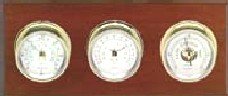
Now a barometer inside a house, even if accompanied by a thermometer, doesn't tell you much about what's happening outside, and doesn't provide you with any information about wind and rain. So the next step in Maximum Weather Instruments evolution was to expand their range of instruments by locating the sensors outside. Unlike other developers of weather stations, Maximum chose to retain the look and feel of their popular barometers, clocks and tide clocks, by sending the outside weather data to their traditional dial type displays.
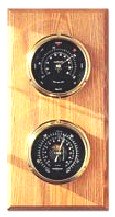
Data transfer was by cable, and the recommended location for the sensors was on or above the rooftop, or north side of the house, depending on the instrument.
This method works well, and retains the appeal of the glass faced display unit as an ornament, decoration or talking point. But apart from methods of retaining maximum and minimum values between resets, it is difficult to keep any close record of changes in the weather.
On to the Digital Age
The next step was to switch to digital recording and display.
The overall appearance, with a brass, nickel or chrome case set in a wooden frame was retained for the display, but the needles and dials characteristic of the traditional units were replaced by a LED display, allowing more flexible handling of maximum, minimum, calculated and cumulative data. So although the overall appearance may have lost some appeal, the upside was the facility to link weather records to a data logger and/or computer.
As a result, Maximum Weather Instruments has developed a very powerful and accurate home weather station, housed in a traditional display.
The final stage (so far) in the development of Maximum Weather Instruments has recently been reached with the addition of wireless transmission of data. Although some modification of sensors is necessary, and a receiver is required, this development fitted in easily with their existing digital range of display units.
Maximum actually went further by adapting some of their analog instruments to wireless data transmission. The pleasing appearance has been retained, but some of the advantages of digitised data are lost. .
So What Else Can a Maximum Weather Station Do?
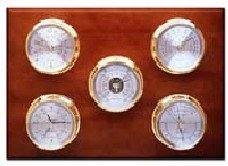
Although some of the weather stations from Maximum Weather Instruments can now handle the same range of weather data as those of other manufacturers, they still present a different approach to the task of weather monitoring and recording.
How much does a Maximum Weather Station cost?
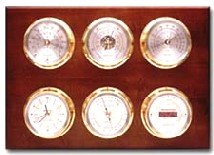
Well there is quite a large range, as you can see from the Maximum Weather Instruments Website, but the recommended prices vary from $925.00for a two instrument station such as the Catalina to$2110.00 for the six instrument (including clock)Weathermaster. Manufacturer's prices for wireless weatherstations are about $500.00 higher. (Prices are those recommended by the manufacturer. You canexpect significant discounts from internet retailers, andeBay is always worth a look) Maximum provide excellent back up service, and so doesThe Outerbanks Weather Company, where you can expect areasonable discount on the full range of Maximum Weather Stations. There is also one further compromise. At this stage, MaximumWeather Instruments do not offer an outside humidity sensor.Although it would be possible to adapt the "Comfortminder",an indoor instrument, to an exterior location, it is unfortunate that a complete integrated suite of exteriorsensors is not available. So let's sum up. Maximum Weather Stations are not a good choice for a starter home weather station, and they were never meant to be. There are numerous alternatives for economic weather recording from companies such as La Crosse, Davis and Oregon , and they are best suited to the weather enthusiast who wants to be able to understand, observe and forecast the weather without breaking the bank. But for those who are looking for a range of weather instruments which will provide them with an accurate, easy-to-see summary of the weather, all put together in an attractive display case, then Maximum Weather Stations are a great starting, and probably finishing point. (While writing this I have been resisting usingthe overworked word "class", but in the case of Maximum Weather Stations it is fully justified). Once installed, they should provide a very attractive, low maintenance and reliable means of keeping up with the ever changing weather. You can find more information on other Home Weather Stations, including How to Set Weather Stations Up elsewhere on this site.
Back to the Top, or return to the Home page. Click Here For Your Free 20 Page Report on Solving But don't buy from there - in almost all cases muchbetter prices are available from both shopfront and internetbased retailers. At all times eBay and Amazon are worthchecking out, and you will notice many of the links go toAmazon. Amazon has built a very sound reputation for customerservice, given the huge amount of business that passes throughtheir website, and many products are accompanied by cleardescriptions, alternatives, and reviews from customers. Thesecan be very helpful, and I shop at Amazon myself. But prices can change very quickly there, so if you have madeup your mind on a product and you see a good price there, grab it before it goes. Where possible, I provide links to other retailers where their prices are competitive. Some may be better than they seem ifthe prices include delivery and, where needed, batteries - check the terms they offer. Finally, I stand to make small commissions on some of the productsI recommend. A lot of work goes into building and maintaining asite like this, and I am not ashamed if I recoup some of the costs,and even make a little money on top. That being said, I will and do recommend sellers where I will notmake anything for myself. One of these is Ambient Weather, a useful retail site with good supporting information. But if you visit there, don't forget to come back! Last update 12/05/2011
|
 Blink
Blink Del.icio.us
 Digg
Digg Furl
Furl Google
 Simpy
Simpy Spurl
Spurl Technorati
 Y! MyWeb