


|
Careful Weather Station Set Up is the Key to Rewarding Weather Observation
Time spent now in preparation for your home weather station set up will save you from future problems and frustration. Because getting the most out of your weather station depends on three very important factors, all linked to each other. Firstly, the outside weather sensors must be set up to get the most accurate and reliable weather information possible from your yard or home. Secondly, the weather sensors and receivers must be able to communicate with each other with as little interference as possible. And finally, the receiver with its display unit must be in a convenient position for you to access it and use it. You may need to give some thought to linking it with a computer or other equipment as well. Let's look at the last consideration first. Location of the Receiver/Display ConsoleThe best place to set up your sensors is in an accessible place in your yard or garden. So take a good look around. You will need to find a clear location for the sensors, preferably out of the way ofeveryday attractions like basketball rings, barbecues or swimming pools. It should have a clear line of sight to a room where you can install the receiver. The receiver's location should also be out of the way of normal home activities. And I'm not ignoring the possibility that some members of your household may not view the weather station with as much enthusiasm as you do. The best choice may be your office or study, or the room where your computer already is. If this is handy to an appropriate location for your outside weather sensors, then you're in great shape. But don't do anything just yet. If the layout of your house and yard is not quite so helpful, it is probably best to tackle the problem from the other direction and consider sensor locations. But before we step outside, here's a quick tip on the positioning of the receiver. Because radio signals are reduced by walls, cladding, even UV coating on windows, the best position for your receiver is near the outside wall of the house. Most receivers have optional wall or desk mounting, giving you quite a lot of flexibility The Ideal Places for Weather SensorsYour first thoughts should be about distance between sensors and the receiver. Transmitting range varies from 80 feet (24 metres) for many temperature sensors, to 300 feet (about 90m) or even 1000 feet (300m) for Davis home weather stations. Each wall the signal needs to pass through will cut the range by 20-30 feet, and trees can also reduce signal range. Normally the longer range transmitters will perform well in most home situations, but be aware of the limitations on the short range units. The ideal requirements for temperature and humidity sensors are different from those recording wind and rainfall, so some juggling of the final position may be required. Most home weather stations will give you quite a bit of room to move here, with each sensor having its own transmitter, or through cabling from wind and rainfall sensors to a single transmitter in the temperature/humidity unit. The main consideration here is that temperature recorders must be sheltered or shielded from direct or strongly reflected sunlight, which will heat them up and result in inaccurate readings, 20°F or more too high, or maybe even damage them. Conversely, wind and rainfall recorders should be located where wind and rain are not affected by sheltering trees or buildings. And finally, the lip of the rain gauge should be the highest point in the immediate vicinity - slightly above the top of a wall or post rather than a little way down. While some compromise may be necessary, with a bit of thought you should be able to find a good location for all the equipment. Here a few tips:
Location of the Receiver
Once you have identified a suitable location for your sensors, preferably within sight of the room where your receiver will be located, there's little more to do. The best place for the receiver will probably be close to the outside wall of the room nearest to the sensors.
To finalise its position, and those of the sensors, follow the manufacturer's instructions about setting up.
First make sure that all weather sensors can communicate with the receiver at close range - in the same room is fine. Then check whether communication is still working when the sensors are taken to the locations you have selected for them. You may need to test different positions and orientations of the receiver at this time.
All being well, firmly fix your sensors in their final position, turn everything on, nod wisely to the family, and you are done.
A Few Final Thoughts
Before you finally install the outside weather sensors, give a little thought to orientation and access. If you are using solar power, check the manufacturer's instructions on precharging, orientation and battery backup, and make sure that battery compartments are easy to open.
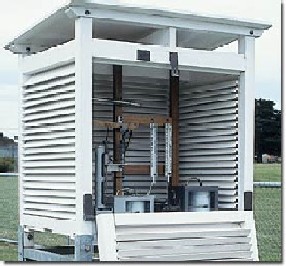
And if you are are staying with traditional instruments rather than using continuously transmitting wireless sensors, you will almost certainly need something like a Stevenson Screen - not only for shielding but for protection of valuable instruments. Because traditional weather stations can only be read manually, think carefully about access to them.
When people have problems with their home weather station, they can often be traced back to their initial set up. So a bit of time and thought at the beginning is a great investment in future trouble free performance.
But other problems can arise, most commonly with the less expensive systems, but again most can be prevented. This topic is covered in Weather Station Problems , which deals with things like weather proofing and maintenance. Take it a step further with the free report on OK. You're done. Pour yourself a mug or glass of your favorite beverage, relax, settle in with your home weather station, and observe all that the weather has to offer. Back to the Top, or return to the Home page. Last update 05/28/2011
|
 Blink
Blink Del.icio.us
 Digg
Digg Furl
Furl Google
 Simpy
Simpy Spurl
Spurl Technorati
 Y! MyWeb